From RacquetX to LiveCourt: what clubs told us, and what we built
25 Nov 2026 • Steve Stanbury
I was invited to be a guest speaker at RacquetX in Fort Lauderdale to talk about how a club goes from an idea on paper to the leading pickleball club in Austin, but what we learned changed our approach to web design.
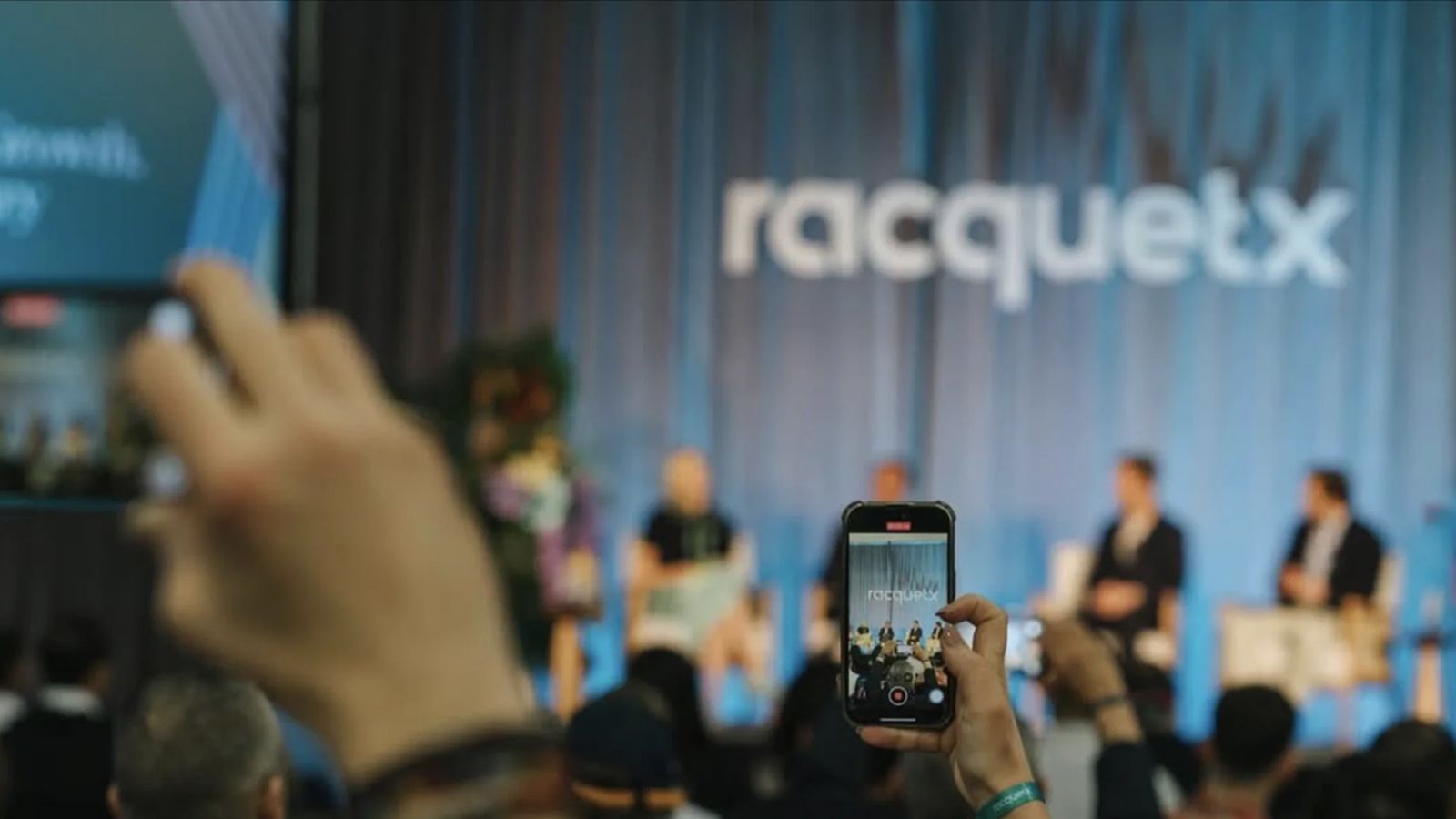
We went to RacquetX in Fort Lauderdale to talk about one thing: how a club goes from an idea on paper to the leading pickleball club in Austin, one of the most competitive markets in the sport.
We came home with something else, a product idea built from the problems club owners kept raising in the hallways, in the Q&As and over coffee. This is the story of that talk, what we heard, and why we built the LiveCourt Web System on top of PodPlay.
What the room was really talking about
On stage, a lot of the conversation was about pay-per-click: ad budgets, cost per lead and campaign tactics.
Off stage, owners were talking about something very different. They talked about friction in the booking journey, communities split across apps, group chats and spreadsheets, what AI means for how players find a club, and how you hold a community together once it gets big. Underneath it all was one question: what actually makes a club successful over years, not weeks?
That gap stuck with me. You can't buy your way out of a weak foundation with ads; if the brand is vague, the website is static and the first booking is painful, paid traffic just sends more people into the same leaky funnel.
Foundations before ads
Our talk was about the groundwork, the things that need to be in place before a single ad dollar is worth spending.
A brand people want to wear. A club brand should be strong enough that members would happily put it on a shirt. That isn't vanity; when people wear your brand, they're telling everyone they belong to something, and that's where community cohesion starts.
Sounding human. Clubs need to know how they talk to people, online and on court, with the same voice in their search listings, their emails and at the front desk. People can tell when they're being marketed at.
Winning at search. Good SEO isn't keyword stuffing; it's answering the questions players are actually asking, in public, on pages that a search engine or an AI assistant can read.
The first-time player. This is where most clubs lose people. A new player isn't just booking a court: they might want someone at their level to play with, they might need the basic rules, the language or what to bring, or they might not know whether open play or a clinic is right for them. If those answers sit behind a login, plenty of them never make it to the court.
A maturing market. Pickleball started out with a reputation as an older player's game, but that's changing fast. SFIA's latest participation data shows teens and young adults aged 13 to 24 now have the highest participation rates of any age group, and the APP puts the average player at around 35. That changes how you fill courts. Older players are often happy to take quieter daytime slots, while young professionals want evenings and weekends, so a clear programming strategy for each group keeps courts full across the whole week, not just at peak.
The problem nobody was naming
The biggest source of friction I kept hearing about wasn't the courts or the coaching; it was where the information lives.
Most booking apps keep everything a player is looking for locked inside the app: open play times, clinics, leagues, and who's playing at what level. Very little of it is easy to find on the open web, so the journey goes like this: search, land on a static club website, click through to the booking app, create an account, then go hunting for a session and a partner who can actually make that date. That isn't a human-led experience; it's admin.
There's a slower problem underneath it too, which I call the diminishing return of the club website. The more successful a club gets, the more time members spend in the booking app, because the website has nothing of value to come back to. Over time the app, and sometimes the app store, starts outcompeting the club's own site for clicks.
That matters, because every visit that skips your website is a visit that never sees your merchandise, your private events, your coaching programmes or your food and drink menu. If you run a kitchen or a bar, that disconnect costs real money, and the club ends up renting its relationship with its own members from someone else's platform.
Great on a spreadsheet, painful in real life
While a lot of booking platforms were busy chasing new features, I kept thinking they needed to go back and fix the basics they still weren't getting right: the customer journey, the experience and the UX.
Instead, many of them kept adding, and now AI is being used to bolt on even more. On paper they look great; line them up in a feature comparison and they tick every box. Then you try to book a court as a new player, and it all falls over.
The cost of that friction is well documented outside our industry. Baymard Institute's checkout research found that 18% of online shoppers abandon an order because they're forced to create an account, and booking a court is no different. Ask someone to sign up before they can even see what's on, then make them log in again every time the app forgets who they are, and you lose people who were ready to play.
Why we've put both feet in with PodPlay
That's why we've gone all in on PodPlay. In my experience it's the best booking system out there for what it does, because it puts the customer journey first. Players can move straight through the ecosystem and see the products and services on offer without creating an account, while other platforms force a login or sign-up at almost every step.
It also takes the club's brand seriously. PodPlay offers white-label apps across iOS, Android and the web, and its own team makes the case that your app is your front door: players should onboard with your logo and colours, not inside an aggregator where your club is one of many. I agree. If you're serious about building a brand, every other logo sitting next to yours waters it down; the club should lead, and the technology should sit quietly behind it.
Just as important for someone like me, PodPlay has a reliable, well-documented API, and that's what made LiveCourt possible.
What we built: the LiveCourt Web System
LiveCourt started on the flight home with a simple idea: take the information players need out of the booking app and put it back on the club's own website, live, public, and readable by search engines and AI.
Using PodPlay's API, we take programming, open play, leagues and availability and publish them on the web, where people are actually searching. That changes the journey completely. A player asks Google or an AI assistant for open play near them at their level, and the answer comes straight from the club's live data, so they get where they want to go sooner, often before they've even opened the website. When they do land on the site, they're exploring the club's programming rather than a dead brochure page, which means they also see the merch, the private event packages and the menu.
This is the direction we're building in now. Search is changing shape: Gartner predicted that traditional search volume would fall 25% by 2026 as people turn to AI assistants, and while Search Engine Land's analysis of over a million keywords suggests demand is shifting rather than shrinking, the direction is clear. Clubs whose information is locked inside an app are invisible to AI agents, so we're developing web applications that make a club's live programming discoverable in search and AI first, with the club's own website as the home everything points back to.
The takeaway
RacquetX reminded me that the best product ideas come from listening, not presenting. The clubs that win long term won't be the ones with the biggest ad budget; they'll be the ones that own their brand, own their relationship with players, and remove every bit of friction between a curious first-timer and a court.
If you run a club and want a quick read on where you stand, take our club assessment: 15 questions covering the foundations above. And if any of this sounds familiar, I'm always happy to talk it through.
Related articles
23 Aug 2026 • Steve Stanbury
What It Actually Takes to Launch a Pickleball Club Website in 2026
Pickleball has grown 171.8% in three years, and most club websites haven't kept pace. A look at why static sites are quietly becoming invisible, both to members and to the AI search tools now deciding who gets found.
22 Apr 2026 • Steve Stanbury
The Do’s and Don’ts of Building a Winning Pickleball Brand
Here’s a guide to the do’s and don’ts when building a strong pickleball brand, logo, and style guide.
Studio notes
Monthly notes on tech and design
Product, interface and brand. What we're designing and building. One email a month.
We only use this address for these notes. Privacy policy.